
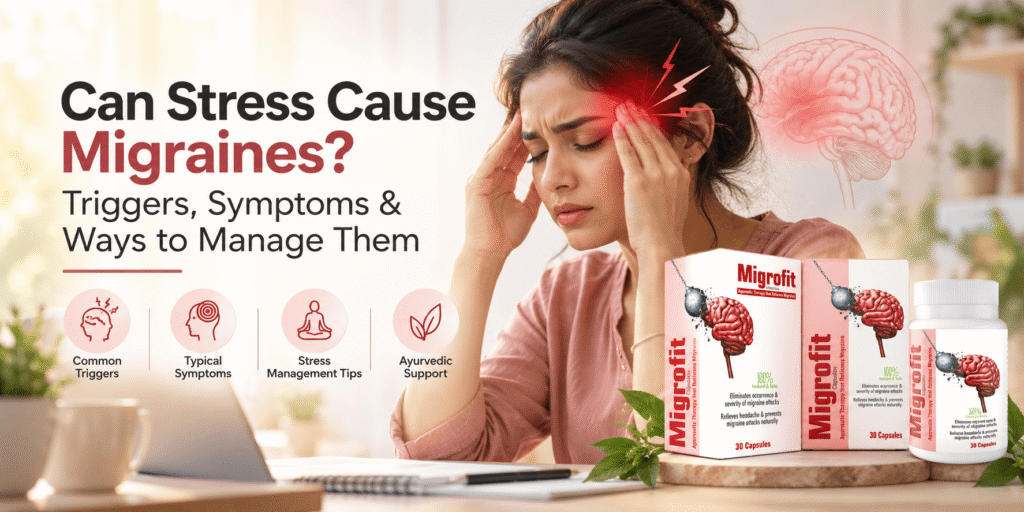
Can stress trigger a migraine? For many people living with migraine, the answer may be yes. Stress is commonly reported as a migraine trigger, and changes in sleep, eating patterns and daily routines during stressful periods may also contribute to attacks. Interestingly, some people experience migraine not during the stressful event itself, but after the stress subsides.
Understanding how stress and migraine are connected can help you recognise personal triggers, manage everyday habits and know when recurring headaches need professional attention.
For those looking for Ayurvedic support, HealthBuffet Migrofit Capsules are formulated as an Ayurvedic migraine-focused product and can be considered as part of a migraine wellness routine under appropriate professional guidance. The formulation includes herbs such as Shankhpushpi, Brahmi, Jyotishmati, Ashwagandha, Jatamansi, Yestimadhu, Tagar, Veet Vach and Sarpagandha.
Can Stress Cause a Migraine?
Stress does not necessarily cause migraine itself, but it can act as a trigger for migraine attacks in susceptible people. Stress may also disrupt sleep, meals, hydration and other routines that can influence migraine patterns. Some people may even experience an attack after a stressful period ends.
Why Can Stress Trigger a Migraine?
- Stress response: stress produces physiological changes that may influence migraine susceptibility.
- Sleep disruption: stress can affect sleep duration and quality.
- Irregular meals: busy/stressful periods may lead to skipped or delayed meals.
- Dehydration: routines can change during stressful days.
- Muscle tension: stress may also contribute to neck/jaw tension and headache symptoms, though migraine and tension-type headaches shouldn’t be treated as interchangeable.
How Can Stress Trigger Migraines?
Stress can affect the body in several ways. During stressful periods, the body’s stress response changes, while sleep, eating patterns, hydration and daily routines may also become irregular. These combined changes can make migraine attacks more likely in people who are susceptible to them. The American Migraine Foundation notes that stress is a common migraine trigger and that managing stress can be an important part of migraine management.
Importantly, stress does not cause migraine in everyone. Each person’s triggers and sensitivity can be different. Keeping a headache diary can help identify whether stressful situations consistently appear before your migraine attacks.
What Does a Stress-Triggered Migraine Feel Like?
Explain that the symptoms aren’t necessarily unique just because stress was the trigger. Depending on the person, migraine may involve:
- throbbing/pulsating head pain
- pain that may affect one side
- nausea or vomiting
- sensitivity to light or sound
- aura in some people
Not every headache during a stressful period is necessarily migraine.
Can Migraine Happen After Stress Goes Away?
Interestingly, a migraine does not always happen during the most stressful moment. Some people experience what is known as a “let-down” migraine, where an attack occurs after a stressful period ends, such as after completing a demanding project or starting a vacation. Changes in the body’s stress response may contribute to this pattern.
This is one reason maintaining consistency in sleep, meals, hydration and relaxation can be helpful rather than allowing stress to build up and then suddenly stopping all activity.
How to Manage Stress-Related Migraine Triggers
Managing migraine involves more than focusing on one trigger. A consistent lifestyle can support overall migraine management. Try to maintain regular sleep and meal timings, drink enough water, stay physically active according to your ability and include relaxation practices such as breathing exercises, meditation or mindfulness. The NHS also recommends managing stress, getting regular exercise, eating regularly and staying hydrated as part of migraine self-care.
A headache diary can also help you record stress levels, sleep, meals, hydration and the timing of migraine attacks. This information can be useful when discussing recurring migraines with a healthcare professional.
7 Ways to Manage Stress-Related Migraine Triggers
- Maintain a regular sleep schedule
- Avoid regularly skipping meals
- Stay hydrated
- Exercise consistently when appropriate
- Practice relaxation techniques
- Avoid sudden routine changes after stressful periods
- Keep a migraine/headache diary
A Better Approach to Stress and Migraine
Stress management is an important part of a broader migraine wellness strategy. By understanding personal triggers, maintaining a consistent routine and seeking appropriate professional guidance, you can take a more informed approach to recurring migraine concerns.
HealthBuffet Migrofit Capsules can be included as part of an Ayurvedic migraine-support routine, while healthy lifestyle habits remain an important foundation for long-term migraine management.
How Migrofit Capsules Fit Into Your Routine
Migrofit Capsules by HealthBuffet are positioned as an Ayurvedic product for migraine support. Their formulation combines multiple Ayurvedic herbs, including Brahmi, Shankhpushpi and Ashwagandha. The manufacturer’s product information lists Migrofit for reducing the occurrence and severity of migraine attacks.
However, Migrofit should not be viewed as a replacement for medical diagnosis or prescribed migraine treatment. Follow the product directions and consult an appropriate healthcare professional, particularly if you have an existing medical condition, take medicines, or are pregnant or breastfeeding.
What’s Inside Migrofit Capsules?
Ingredient | Role in formulation |
Brahmi | Traditionally used in Ayurvedic wellness |
Shankhpushpi | Traditionally used in Ayurvedic formulations |
Ashwagandha | Traditionally used in stress/wellness formulations |
Jatamansi | Traditional Ayurvedic ingredient |
Yestimadhu | Traditional herbal ingredient |
Tagar | Used in traditional Ayurvedic preparations |
Frequently Asked Questions
- Can stress trigger a migraine?
Yes. Stress is commonly reported as a migraine trigger, although migraine susceptibility and triggers vary between individuals. Stress may also affect sleep, meals and daily routines, which can contribute to migraine attacks. - Why do I get migraines after a stressful event?
Some people experience migraine after a period of stress has ended, sometimes called a “let-down migraine.” Changes associated with moving from a high-stress period into relaxation may contribute to attacks in susceptible people. - What does a stress migraine feel like?
A migraine triggered during or after stress can have typical migraine symptoms such as throbbing or pulsating head pain, nausea and sensitivity to light or sound. Symptoms vary, and not every stress-related headache is migraine. - How can I reduce stress-related migraine triggers?
Regular sleep, consistent meals, adequate hydration, appropriate exercise and stress-management practices may help. Keeping a migraine diary can also help identify patterns between stressful events and attacks. - Can lack of sleep and stress trigger migraine together?
They may. Migraine attacks can be influenced by multiple factors, and stressful periods often coincide with changes in sleep, eating patterns and other daily habits. - Why should I keep a migraine diary?
A diary can help you track headaches alongside sleep, stress, meals, hydration and other possible triggers. This may help identify patterns and provide useful information to discuss with a healthcare professional. - What are Migrofit Capsules used for?
Migrofit is an Ayurvedic formulation marketed for migraine support and contains ingredients including Brahmi, Shankhpushpi, Ashwagandha, Jatamansi and Sarpagandha. It should complement appropriate migraine care rather than replace medical diagnosis or prescribed treatment. - When should recurring migraines be checked by a doctor?
Seek medical advice when headaches are recurring, worsening, significantly affecting daily life or changing from your usual pattern. Sudden or unusually severe headaches and headaches accompanied by concerning neurological symptoms require prompt medical attention.
Read More about –
Low energy daily? Try Green Tea Tablets
Best Supplement for Weight Loss
Seasonal cough and throat pain
Tulsi Pearl Drops Natural Immunity Booster
Amla Juice for digestion and immunity
Moringa Powder for Overall Health
Why is Pancham Haldi a better choice for daily health?